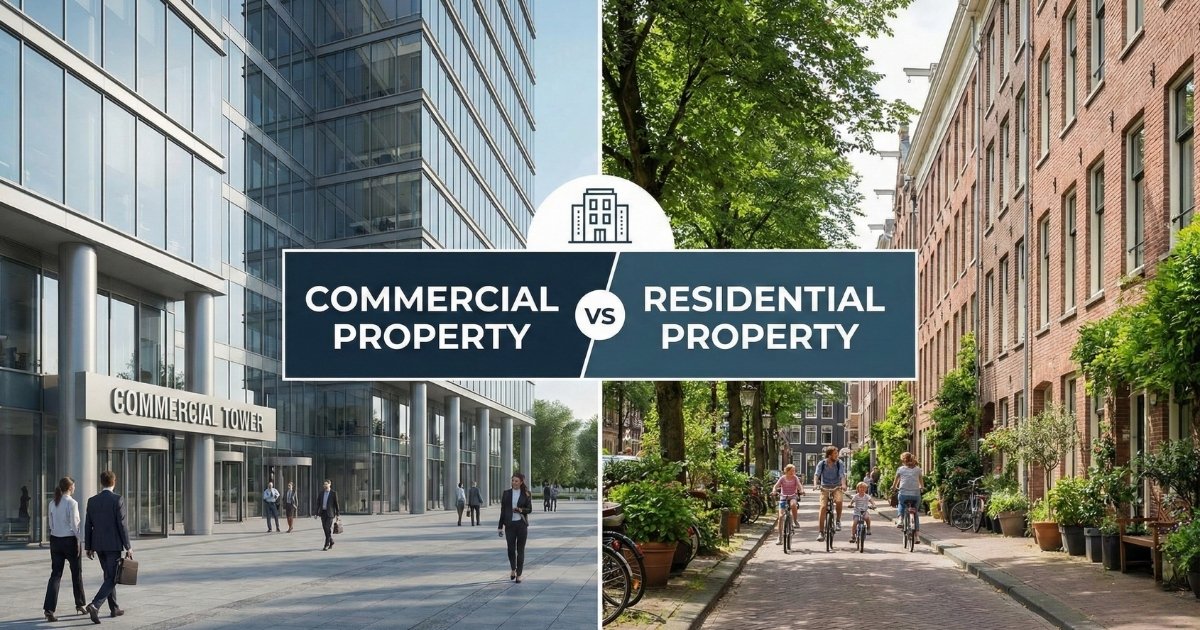
What Is Commercial Property Investment?
Commercial real estate may involve buildings employed for business purposes, including:
- Office spaces
- Retail shops and malls
- Warehouses and industrial units
- Hotels and mixed-use buildings
Sources of additional income:
Income is generated mainly through an extension of lease terms and enhanced rents.
Pros of Commercial Property
- Higher rental income: Business entities pay more compared to other entities.
- Tenancies with long leases: 3-10 years, resulting in steady income streams.
- Professional Tenants:
Business premises are kept in a better manner. - Greater ROI potential: Higher income potential if it is a prime location.
Cons of Commercial Property
- Higher Investment Cost: Requires higher investment.
- More risk: Vacancy may take longer to fill if the tenant moves away.
- Complex management, legal issues, and financial information are more complex.
- Sensitive to Economy: This service type is affected by economical activities because
Profitability: Which One Makes More Money?
|
|
|
|||
| Entry Cost | Low–Medium | Medium–High | |||
| Rental Income | Steady but smaller | Higher and stronger | |||
| Lease Duration | 6–12 months | 3–10 years | |||
| Vacancy Risk | Lower | Higher if empty | |||
| Management Style | More hands-on | More professional |
👉 Residential is safer for beginners.
👉 Commercial is powerful for experienced investors.
Risk Comparison
Every investment has risk. The key is knowing what kind you’re comfortable with.
Residential Risk
- Tenant damage
- Late payments
- Frequent maintenance
- Short-term vacancies
Commercial Risk
- Economic downturns
- Long vacancy periods
- Big repair expenses
- Complex legal contracts
✔ Residential is more stable and straightforward if that’s what you’re after.
✔ Commercial might be more rewarding with the risk.
Time & Involvement
Residential investors often handle:
- Tenant screening
- Repairs
- Rent collection
Commercial investors deal with:
- Legal leases
- Business negotiations
- Professional management teams
If you want passive income, commercial is usually more hands-off — but harder to enter.
Final Thoughts
Every real estate investor has to find their own way. Both commercial and residential properties are massive wealth builders – if you know how to deploy them.
Most affluent investors begin with residential and expand into commercial once they’ve built up the experience and capital. How do you get there? Start where you are. Educate yourself. Scale intelligently. Homes or office buildings, the message is the same:
👉 Invest wisely. Operate efficiently. Plan for the future.